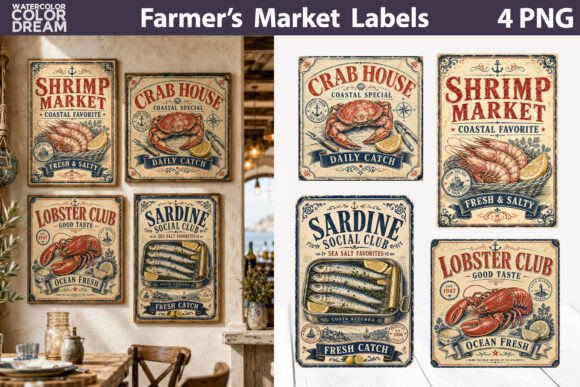
Reviving the Rustic Coast: The Strategic Value of Vintage Seafood Market Labels in Modern Design
In an era where digital minimalism often dominates the visual landscape, there is a surging counter-movement toward tactile authenticity and nostalgic storytelling. This shift has revitalized interest in retro aesthetics, particularly within the culinary and lifestyle sectors. At the forefront of this trend are Vintage Seafood Market Labels, a collection of design assets that bridge the gap between historical maritime heritage and contemporary creative needs. These labels, featuring detailed illustrations of crab, shrimp, sardine, and lobster, offer more than just decorative flair; they provide a narrative framework for brands and creators looking to establish trust, evoke sensory memories, and differentiate their products in a crowded marketplace.
For professionals ranging from independent entrepreneurs to established marketing agencies, understanding the utility and emotional resonance of these assets is crucial. This article explores how these rustic nautical elements fit into broader industry trends, why consumer preferences are shifting toward them, and how they can be practically integrated into modern workflows.
The Anatomy of Authenticity: What Defines Vintage Seafood Market Labels?
Vintage Seafood Market Labels are not merely clip art; they are curated visual artifacts designed to mimic the aesthetic of early 20th-century coastal commerce. Historically, seafood markets relied on bold typography and hand-drawn illustrations to communicate freshness and origin to customers who could not inspect the product directly. Today, these labels serve as a digital shorthand for quality and tradition.
This specific collection includes four high-resolution PNG files, each rendered at 300 dpi with a transparent background. This technical specification is vital for professionals who require flexibility in their design processes. Whether the goal is to overlay a label onto a textured paper background for a menu or embed it into a complex packaging mockup, the transparency ensures seamless integration without awkward white borders.
The imagery itself—depicting the classic staples of the sea such as crab, shrimp, sardine, and lobster—is crafted to evoke the rugged charm of a working waterfront. However, the creation process reflects a fascinating intersection of tradition and technology. While the initial artwork was generated with the assistance of AI to ensure intricate detail and stylistic consistency, it underwent rigorous refinement and editing by a human designer. This hybrid approach guarantees that the final output retains the organic imperfections of vintage print while meeting the precision standards required for modern professional applications.
Aligning with Broader Consumer and Industry Trends
The resurgence of vintage aesthetics is not a fleeting fad; it is a response to deeper shifts in consumer psychology and market dynamics. In the post-pandemic world, there is a pronounced desire for "slow living," artisanal craftsmanship, and a connection to local heritage. Consumers are increasingly skeptical of mass-produced, sterile branding and are gravitating toward visuals that suggest history, care, and provenance.
The Rise of the Artisanal Food Movement
The food and beverage industry has seen a massive pivot toward the "farm-to-table" and "boat-to-bistro" narratives. Restaurants and specialty food producers are using Vintage Seafood Market Labels to signal that their ingredients are sourced responsibly and prepared with traditional methods. A simple sticker on a jar of pickled sardines or a sign above a fresh catch display transforms a commodity into a story. It tells the customer that the business values the legacy of the trade.
The Farmhouse and Coastal Lifestyle Boom
Beyond commercial applications, the interior design sector has embraced the "coastal grandmother" and farmhouse styles. Homeowners are curating spaces that feel lived-in and warm, rejecting the coldness of ultra-modern minimalism. Pantry organization has become a form of home decor, with glass jars labeled with rustic nautical designs becoming a staple on open shelving. These labels allow individuals to personalize their domestic environments, creating a cohesive theme that extends from the kitchen to the dining room.
Why Creatives and Entrepreneurs Are Paying Attention
For freelancers, marketers, and small business owners, the demand for high-quality, thematic assets is driven by the need for speed and differentiation. Creating custom illustrations from scratch is time-consuming and expensive. Ready-to-use assets like Vintage Seafood Market Labels solve this problem by providing immediate value.
The relevance of these labels stems from their versatility. They are not confined to a single medium. A graphic designer might use them for a social media campaign promoting a summer seafood festival, while a craft enthusiast might cut them out for scrapbooking a family vacation to the coast. This adaptability makes them a cost-effective investment for anyone looking to infuse their projects with a specific mood without starting from zero.
Changing Workflows and Expectations
Modern creative workflows prioritize agility. Professionals expect assets that are plug-and-play yet customizable. The 300 dpi resolution ensures that these images hold up when printed on large format signage or small-scale recipe cards. The transparent background eliminates the need for tedious masking work in software like Adobe Photoshop or Illustrator, allowing creators to focus on composition and strategy rather than technical cleanup.
Furthermore, the ethical dimension of AI-assisted design is becoming a topic of conversation. By acknowledging that the artwork was created with AI and then carefully refined by a human, this product addresses the growing market preference for transparency. It assures buyers that they are receiving a polished, unique design rather than a raw, unedited algorithmic output. This balance allows businesses to leverage technological efficiency while maintaining a commitment to quality control.
Practical Applications Across Industries
The utility of Vintage Seafood Market Labels extends across a wide spectrum of use cases. Here is how different sectors are leveraging these assets to enhance their brand identity and operational aesthetics:
- Seafood Restaurant Signs: Establishments can use these illustrations to create chalkboard menus, window decals, or hanging signs that immediately set a maritime tone. The imagery of a lobster or crab acts as a universal symbol of freshness, drawing in hungry passersby.
- Market Packaging: For farmers' markets and online seafood vendors, packaging is the primary point of contact with the customer. Applying these labels to boxes, bags, or individual containers elevates the unboxing experience, making the product feel premium and thoughtfully curated.
- Pantry Labels and Recipe Cards: Home cooks and content creators are using these designs to organize their kitchens aesthetically. Printing these labels for glass jars creates a uniform look, while incorporating them into recipe cards adds a layer of visual storytelling to cooking blogs and cookbooks.
- Stickers and Scrapbooking: In the realm of personal crafts, these images serve as focal points for memory keeping. They are ideal for documenting travel experiences, fishing trips, or culinary adventures, adding a touch of nostalgia to personal journals.
- Coastal Crafts and Farmhouse Projects: DIY enthusiasts incorporate these PNG files into wood signs, canvas prints, and fabric transfers. The rustic style complements weathered wood and natural fibers perfectly, aligning with the current popularity of shabby chic and coastal decor.
The Intersection of Technology and Tradition
The production of Vintage Seafood Market Labels highlights a significant development in the creative economy: the symbiotic relationship between artificial intelligence and human creativity. While AI tools have democratized image generation, the ability to refine, edit, and polish these outputs remains a distinctly human skill. The fact that this collection was "carefully refined and edited" to create a "polished final design" underscores the importance of the human touch in ensuring brand consistency and artistic integrity.
This approach allows creators to access a level of detail and variety that would be difficult to achieve manually, all while maintaining the soulful imperfections that define the vintage aesthetic. It represents a forward-looking workflow where technology handles the heavy lifting of generation, and the artist directs the vision, resulting in assets that are both efficient to produce and emotionally resonant.
Conclusion: Elevating Your Creative Projects
As the market continues to evolve, the demand for authentic, story-driven design will only intensify. Vintage Seafood Market Labels offer a powerful tool for professionals and enthusiasts alike to tap into the enduring appeal of the coastal lifestyle. Whether you are rebranding a seafood restaurant, organizing a farmhouse pantry, or crafting a personalized gift, these illustrations provide the visual language needed to connect with your audience on a deeper level.
By integrating these rustic nautical elements into your projects, you are not just decorating; you are communicating values of tradition, quality, and heritage. With their high resolution, transparent backgrounds, and versatile subject matter, these labels are ready to bring a genuine coastal market feel to your next creative endeavor. Thank you for visiting our shop and exploring how these timeless designs can transform your work.